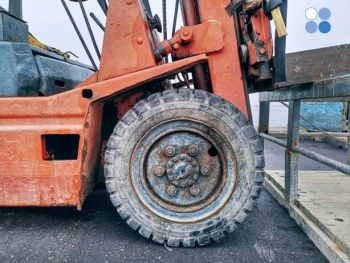
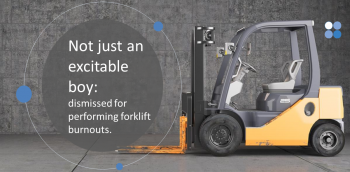
A 20-year-old employee who was summarily dismissed for performing forklift burnouts has had his dismissal upheld by the Fair Work Commission (FWC).
Although the 20-year-old did not dispute the reason for his dismissal and he conceded that he had acted in a dangerous manner, he endeavoured to establish that procedural deficiencies and a level of inconsistent treatment created unfairness with his dismissal.
The Fair Work Commissioner described the employee’s actions as “one of the most egregious acts of gross and wilful misconduct” that he had witnessed in more than two decades of arbitrating unfair dismissal claims and the employee’s manager suggested the 20-year-old’s behaviour was something that, in 34 years of his working life, he had not come across before.
BACKGROUND:
When the employee and another worker realised that they had been left unsupervised for a short time, the employee decided to do burnouts on a forklift while the other worker video recorded the burnouts on his mobile phone.
To enhance the forklift burnouts, the employee poured thinner solution onto the concrete surface as an accelerant and lubricant. The employee also smashed glass bottles onto the concrete where he performed the burnouts.
On the following day the Production Manager noticed that there were skid marks, broken glass, and dirt on the concrete. The employee told the Production Manager that the other worker was responsible for the forklift burnouts, however the Production Manager later received a video of the 20-year-old employee doing the burnouts on the forklift. He decided that the employee’s conduct (as shown in the video) was serious misconduct for which the employee should be immediately dismissed.
At the FWC hearing, the 20-year-old was represented by his mother who accepted that her son had acted in a dangerous manner with the employer’s forklift. However, the mother submitted that her son’s actions were not the only unsafe practice that occurred at the workplace, and therefore the dismissal of her son was asserted to be unfair.
The mother also submitted that there was another party involved in the forklift burnout incident, and that other party had not been reprimanded and the absence of any disciplinary action against that person, established unfairness with the dismissal of the applicant.
The mother acknowledged that the forklift burnouts represented “the straw that broke the camel’s back” as her son had previously been the subject of a number of verbal complaints and at least one written warning regarding his performance and/or conduct involving a number of very disturbing events including; physical altercations, safety breaches, drunkenness, and property damage.
The employee’s mother submitted that it would be too uncomfortable for him to return to the workplace and, as a consequence, he was not seeking reinstatement as remedy for his alleged unfair dismissal but instead a “cash settlement”
The mother had also raised her son’s mental health issues, however the Commissioner said it would be troubling if mental health issues had contributed to the employee’s behaviour as exhibited in the forklift burnout incident.
“Assuming that such mental health problems were more than what might be described as the actions of “just an excitable boy”, then such issues might, sadly, impact on the applicant’s capacity for employment in any situation that involved use or access to moving machinery”, the Commissioner said
“In any event, consideration of any potential mental health implications could not establish any unfairness with the dismissal of the applicant in the circumstances as revealed in this case”.
The Employer submitted that the 20-year-old had failed to properly grasp the seriousness of his actions and that it was inappropriate to try to use other events involving workplace misconduct as some means to reduce the seriousness of his own misconduct.
PROCEDURAL DEFICIENCIES & INCONSISTENT TREATMENT:
Procedural deficiencies
Criticism can be made of the procedures that the employer adopted regarding the implementation of the 20-year-old’s dismissal as the employer did not provide any written notification of the reason for the dismissal and did not provide him with an opportunity to respond.
However, the Commissioner found the nature of the misconduct of the employee and the evidence provided by way of the video recording of the forklift burnouts overshadowed any procedural errors.
The Commissioner said the conduct of the employee represented “gross and wilful misconduct of such severity as to justify summary dismissal without need for further inquiry”.
Inconsistent treatment involving dismissal
The employee’s challenge to his dismissal concentrated upon what he perceived to be the inconsistent treatment that he received when compared to the person who filmed the forklift burnout incident.
In some instances, established inconsistent treatment involving dismissal might represent a sound basis upon which to find that a dismissal was harsh or unreasonable.
However, in this instance any inconsistency in the employer’s application of the disciplinary consequences arising from the forklift burnout incident could not operate so as to provide a basis to establish that the dismissal was unfair. This was particularly the case because of the severe nature of the misconduct.
CONCLUSION:
The particular misconduct of the employee in this case represented gross and wilful misconduct. Given the particularly extreme nature of the misconduct of the employee, the identified procedural deficiencies, and a level of inconsistent treatment, did not establish any basis for the Commissioner to find unfairness associated with the dismissal of the employee.
The Commissioner found the dismissal of the employee was not harsh, nor was it unjust, or unreasonable and, as such, the application for unfair dismissal remedy was dismissed.
LESSONS FOR EMPLOYERS:
Inconsistent treatment of previous similar conduct by other employees in the workplace is an issue that can be relevant in determining unfair dismissal. Employers should seek to act consistently when disciplining employees. However, an employee is only likely to succeed in arguing that their dismissal is unfair due to inconsistent treatment if the circumstances of their case are truly parallel with that of another employee treated more leniently. Procedural deficiencies in the dismissal process may be outweighed in circumstances of gross misconduct.
s.394 - Application for unfair dismissal remedy Jackson Macumber v Ace Bottle Printers Pty Ltd (U2018/11097) COMMISSIONER CAMBRIDGE
Savvy Workplace Solutions
Organisations depend on their people to overcome business challenges and deliver results. Savvy Human Resources is about leveraging our know-how, experience and commercial insight to design and execute practical human resources strategies and programs that enable business performance through people performance. Learn more......
Savvy HR Services
Dealing with misconduct in the workplace can be complicated and a second opinion and Savvy HR advice can be invaluable.
As experienced HR specialists Savvy HR helps manage employee relations matters including managing performance, grievances and workplace investigations. Savvy HR has advised a range of blue and white collar employers on their ER strategy and IR obligations and directly advises on managing complex performance issues, such as employee theft, bullying, fraud and sexual harassment.
For workplace consulting, employment advice, employment relations support Ballina, Brisbane & Sydney contact Savvy HR.
For Human Resources Consulting Gold Coast Human Resources Ballina Human Resources Sydney contact Savvy HR.
Prohibition on republication
No part of this publication may be copied or reproduced without the written consent of Savvy HUman Resources Associates Pty Ltd (SAVVYHR).
This publication is provided by way of general guidance only and is not to be construed by the reader as legal advice or as a recommendation to take a particular course of action in the conduct of their business or personal affairs. You should not rely upon the material as a basis for action that may expose you to a legal liability, injury, loss or damage and it is recommended that you obtain your own advice relevant to your particular circumstances.